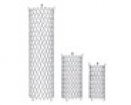
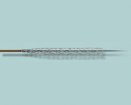
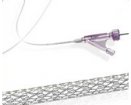
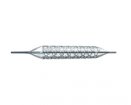
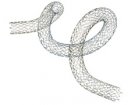
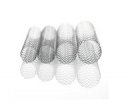
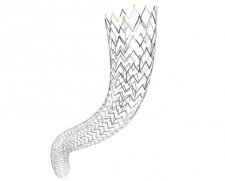
Zilver Stent

Zilver Stent

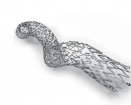
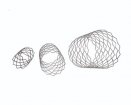
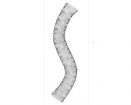
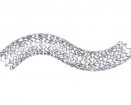
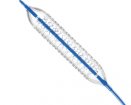
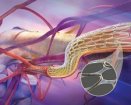
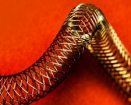
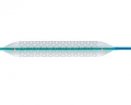
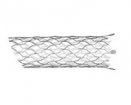
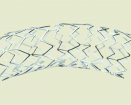
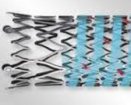
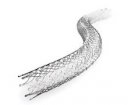
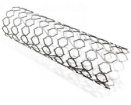
Used as an adjunct to percutaneous transluminal angioplasty (PTA) in the treatment of symptomatic vascular disease of the iliac arteries. Self-expandable stent made of nitinol. Flexible, slotted tube which provides strength and flexibility upon deployment. Supplied with multiple gold markers...

read full description
Share |
Editor's Review
4 Stars
User Rating

No Ratings

Sorry, you have to be logged in to post a comment

Please either Login or Register for an account

Product Description

(From Which Medical Device)

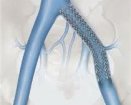
Used as an adjunct to percutaneous transluminal angioplasty (PTA) in the treatment of symptomatic vascular disease of the iliac arteries.

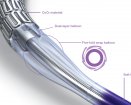
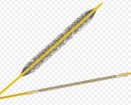
  • Self-expandable stent made of nitinol.
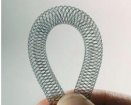
  • Flexible, slotted tube which provides strength and flexibility upon deployment.
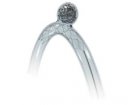
  • Supplied with multiple gold markers on each end for precise placement in the lumen.
  • Pre-loaded in a 5.0 Fr OD Flexor® introducer – designed to provide maximum flexibility without kinking or compressing.
  • Recommended 5.0 Fr sheath/7.0 Fr guiding catheter size.
  • Accepts .018 inch diameter wire guide.

Supplied sterile in peel-open packages. Intended for one-time use.

Editor Reviews

Reviewed Sep 6, 2007

Features

This is a self expanding nitinol stent that can be used in either the biliary system or vascular system. Cook claim good radial force, flexibility and durability (as do all manufacturers). There are two versions, the 635 that goes over a 0.035 inch diameter guide wire and the 518 that accepts a 0.018 inch diameter guide wire. The following refers to the 635 version.

Design/construction

The stent has gold markers on each end to aid visibility and placement and comes premounted on a 6F introducer. The stent can be placed through a 6F sheath and takes a standard 0.035 inch guidewire. The stent is MRI compatible.

In use

The stent can be inserted through a 6F sheath. Stent positioning is aided by 4 highly radio opaque gold markers on each end. Deployment is fairly standard with a safety lock removed first. Then hold the central metal cannula in place relative to the patient and uncover the stent by withdrawing the handle. The stent cannot be recovered during deployment.

Results so far

So far we have had excellent results with this stent in more than 20 patients. Its fairly wide mesh allows for placement in a T configuration for hilar tumours. The disadvantage of this may be earlier tumour ingrowth ?

Conclusion

Simple to deploy and it seems to have relatively good radial force. The wider mesh allows insertion in a T configuration. The end markers aid positioning. I have yet to try the 518 version and am keen to hear from anyone who has !

For:

  • Rapid easy deployment
  • Flexible
  • Opaque end markers

Against:

  • 6F sheath needed for 635 version
  • Not very visible

Dr Phil Haslam
Consultant Radiologist

Videos

Latest News

Posted on : 17 May 2012
Return to impact sports such as jogging, soccer or martial arts is a goal for some patients after total hip arthroplasty... Read more
Posted on : 16 May 2012
The Ellipse ICD has recently received approval from the U.S. Food and Drug Administration (FDA)... Read more
Posted on : 14 May 2012
Researchers from the Hacettepe University, Ankara have demonstrated that using wii-sports after anterior cruciate ligament reconstruction is as good as conventional rehabilitation...  Read more
Posted on : 11 May 2012
Adding to the debate about bearing surfaces, a team from St Michael?s Hospital in Toronto studied 102 hip replacements in 91 patients... Read more
Posted on : 05 May 2012
The BMJ continues to demonstrate its interest in metal on metal hip replacements by publishing a study from Costa et al of Warwick University (1). 126 patients thought suitable for hip resurfacing... Read more